The thesis, before any pixels
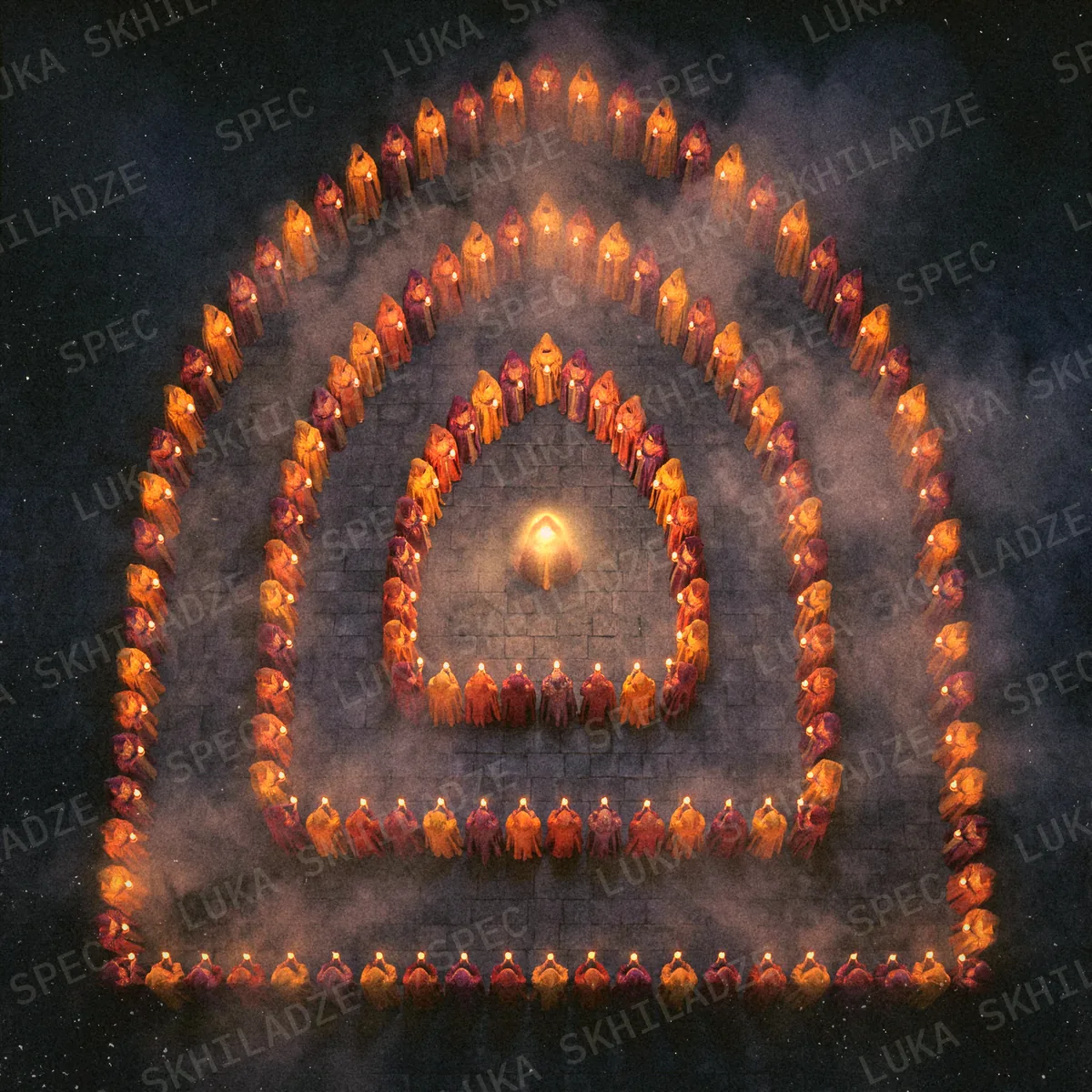
What Anjoman promises
An answer you can check. Every chat app now promises that AI will “handle it”. Anjoman’s difference is underneath: Telegraph ranks every provider per kind of job, sends your job to whoever is ranked best right now, has the result verified, and settles payment on-chain.
The beta’s line, “Don’t choose the AI. Choose the outcome”, is right and stays. But today the screen hides the part that makes the outcome worth choosing. Your answer arrives as one paragraph; who answered, how they rank and how sure they are sit behind a collapsed toggle.
Why its answer beats one model’s
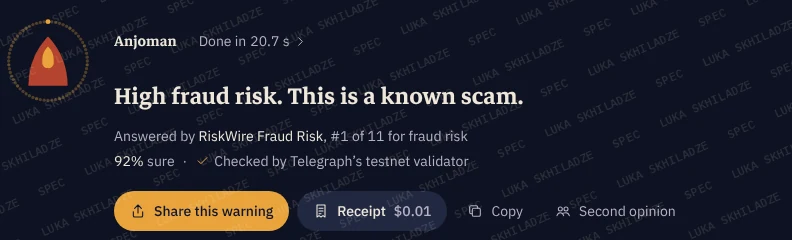
One model grades its own homework. On Telegraph, the provider that answered was measured best for that exact job this epoch (RiskWire Fraud Risk was #1 of 11 for fraud risk when I asked), the measuring is done by an evaluator anyone can challenge, and validators verify the result. Nobody can buy the top spot.
So every answer can carry four facts a single model can’t: who answered, how they rank, how sure they are, and a receipt. The design rule is to show all four under every answer, with the detail one tap away, and to say what wasn’t checked, the way LiveCert said it skipped the EU and UK sanctions lists. That honesty is part of the proof.
How it sits under Telegraph and next to Hermes
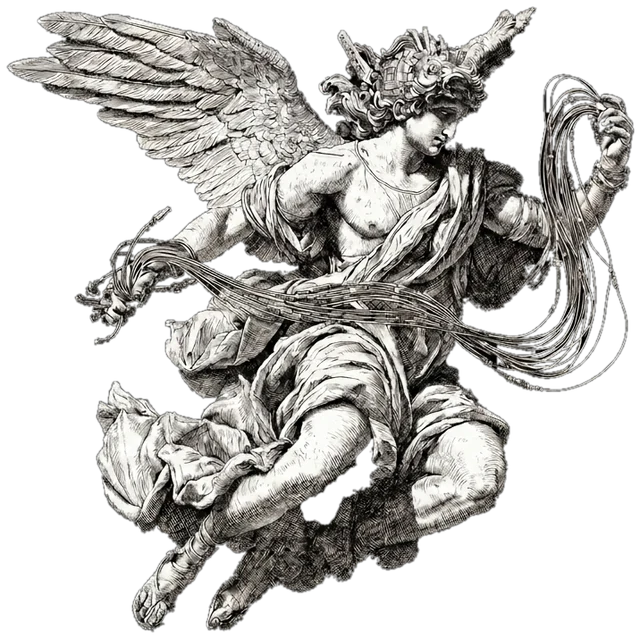
Telegraph is the network: the grading, the routing, the settlement. Hermes is its messenger. Anjoman is where a person goes to ask: the oracle.
The architecture is an endorsed brand, Anjoman, on Telegraph. Anjoman leads in its own product. “On Telegraph” sits beside the wordmark, in the footer and on every receipt, and the receipt is where Telegraph’s own voice shows: hashes, epochs, validators. Hermes stays on Telegraph’s surfaces. He carries the question; the oracle answers it. The link between the two marks is structural: the ring of 64 points around Anjoman’s mark is Telegraph’s validator set.
How one oracle fits a name that means an assembly
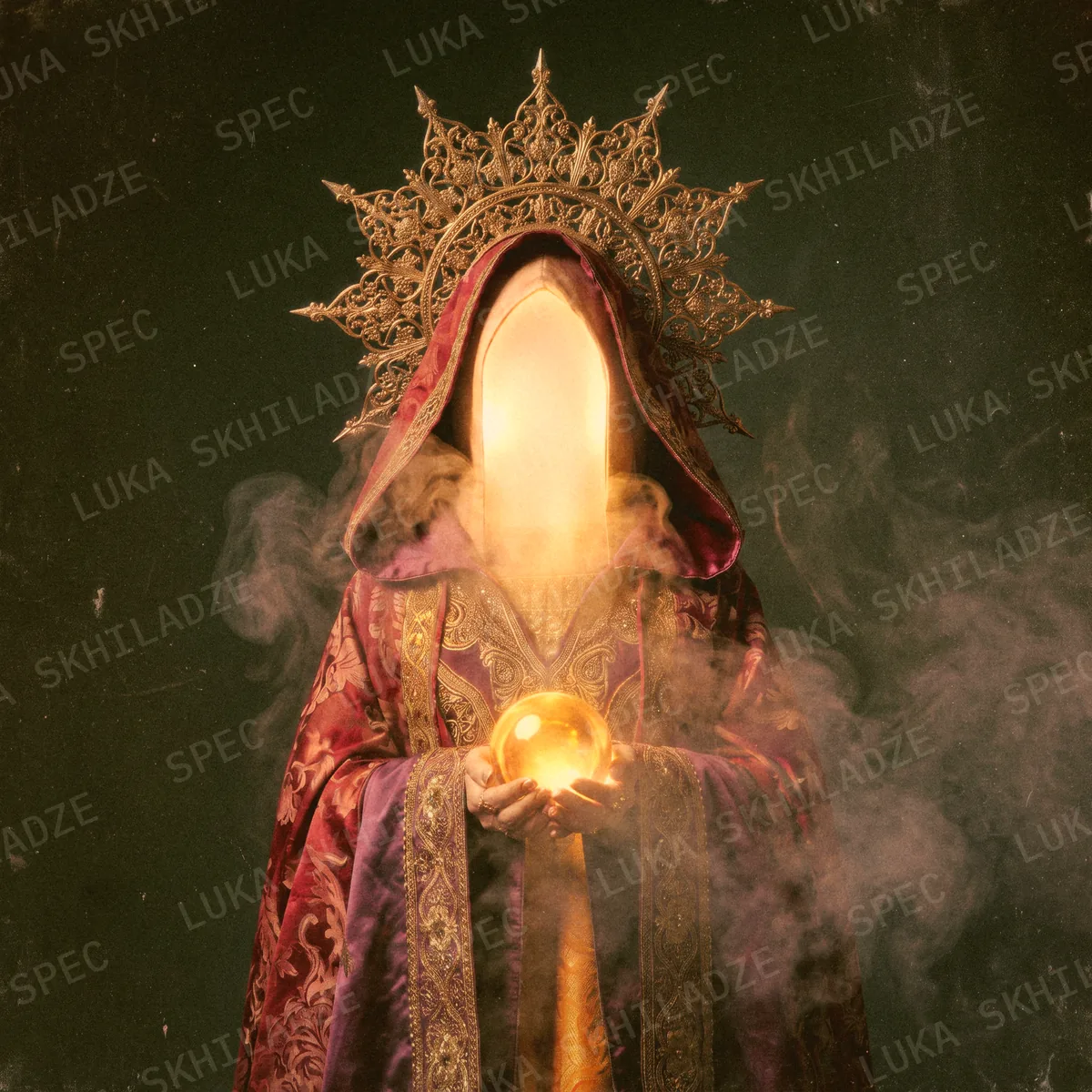
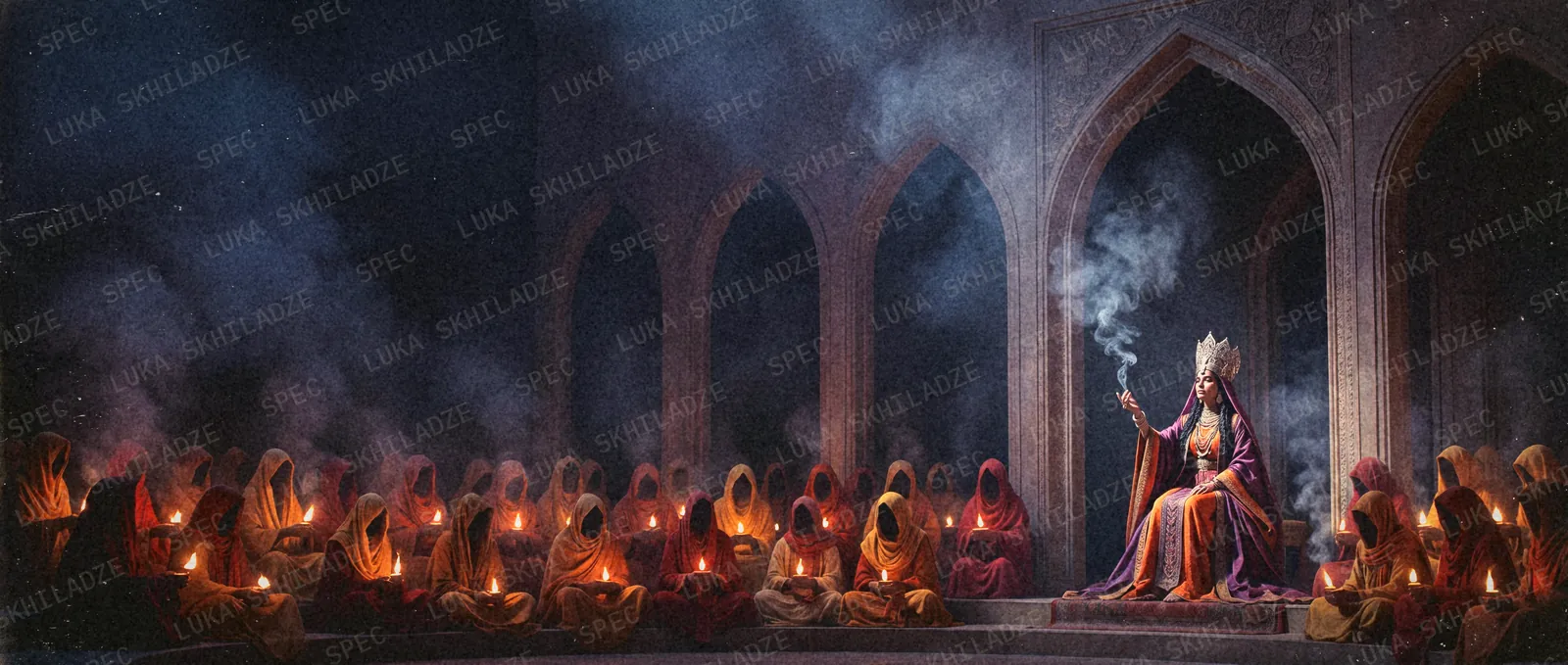
Anjoman is a gathering where poets and thinkers meet. The oracle isn’t one genius. It is the face the assembly speaks through, so it has no face of its own: where the face should be there is light, and the light comes from the many.
That is the mark: a hood that is also an arch, a face that is only light, and from 64 px up a ring of 64 points. In the product the mark is the progress indicator and then the answer’s seal. Points stir while Anjoman reads the question, providers light up while it routes, validators light up while it verifies, and the face fills with light when the answer is final. Your own logo file already says it: “the face fills with light when your outcome is ready”.
One line I’d hold firmly: the Midjourney prompt says “cult leader”. With a token in the picture, the public face should be an oracle. No human face, nobody bowing, no crowd worshipping one figure. The figure faces you, at your level.
Where imagery lives, and where the UI stays quiet
Imagery lives at the edges: the landing hero, the empty state, launch banners, share cards. It never sits behind an answer, a number or a receipt. The working screens stay quiet: night surfaces, bone text, and one saffron light reserved for the answer and the action that matters.
Three voices keep it legible. The oracle speaks in Markazi Text, a typeface designed for Arabic script and Latin together, so the Persian name can be written in its own script. The interface and the providers’ evidence speak in IBM Plex Sans. The network speaks in IBM Plex Mono, and only for machine strings.
Every new image goes through one grade matched on scopes to your references: lifted milky blacks, slate shadows, saffron highlights and film grain. That is what turns twenty generations into one campaign.
Three tensions in the brief
“Feel like Claude, features like OpenRouter.” Take Claude’s calm: one composer, the answer first, details in a side panel. Take OpenRouter’s plumbing: one balance, usage by day, keys with spend limits, rankings. Leave OpenRouter’s model picker, because it contradicts “don’t choose the AI”; show the ranking instead of asking you to choose from it.
A single guru, a name that means many. The face is the assembly’s light.
Fourteen pages of logo directions. One decision, built from your strongest idea: the lit face.